

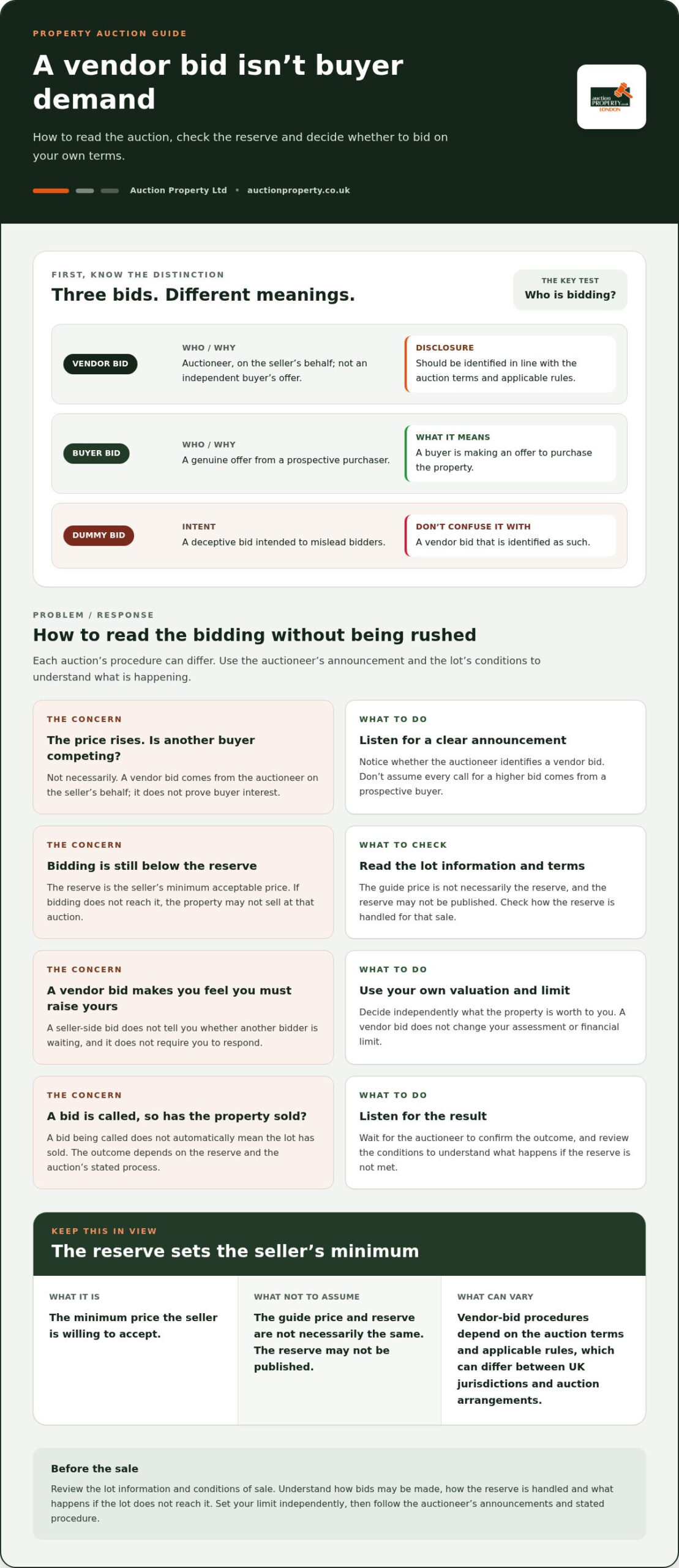
What if a bid that moves an auction forward isn’t coming from another buyer? If you’re asking “what is a vendor bid”, the key distinction is disclosure: an auctioneer may make a bid on the seller’s behalf, but it should be identified as a vendor bid. It isn’t a genuine buyer offer, and it shouldn’t be confused with a dummy bid intended to mislead bidders.
It’s reasonable to question whether bidding reflects real buyer demand, especially when an auction is moving quickly. A disclosed vendor bid may be used to start the bidding or move it along below the reserve price, the seller’s minimum acceptable price. The auctioneer’s announcement and the auction terms matter, so don’t assume every bid represents a competing buyer.
This guide explains who makes a vendor bid, how it differs from a genuine buyer bid and a deceptive dummy bid, and how it relates to the reserve price. You’ll also learn what to review in the auction terms before bidding and how to stick to your budget if bidding hasn’t reached the reserve. Prepare carefully, then make each bid on your own terms.
Key Takeaways
- Learn what is a vendor bid, who makes it and why it isn’t an independent buyer’s offer.
- See how auction terms, the auctioneer’s announcement and the reserve price can help you interpret bidding.
- Compare vendor bids, genuine buyer bids and dummy bids by who makes them, their intent and disclosure.
- Use practical checks to set a bidding limit and understand the auctioneer’s procedure and reserve arrangements.
- Find out how set auction times, guide prices and live-streaming can help you follow lots and prepare to bid.
What Is a Vendor Bid in a Property Auction?
A vendor bid is made by the auctioneer on the seller’s behalf. It is not an independent buyer’s offer to purchase the property. Put simply: a vendor bid comes from the auctioneer, but its purpose is to support the seller’s position, not to buy the lot.
If you’re asking “what is a vendor bid”, the distinction matters because a rise in the bidding doesn’t always mean another buyer is competing. A vendor bid may be used to start the bidding or keep it moving when offers are below the reserve, but the procedure depends on the auction’s terms and applicable rules. The auctioneer’s announcement and the conditions of sale help explain what is happening. The broader term bidding can also cover practices described as “bidding off the wall”.
Who makes a vendor bid, and why?
The auctioneer makes the bid in their role at the sale, acting on the seller’s behalf rather than as a prospective purchaser. Depending on the auction’s terms and applicable rules, a vendor bid may be used to open the bidding or encourage further offers while the price remains below the reserve.
A vendor bid does not, by itself, show that a buyer is interested or ready to purchase. Treat it as part of the auction process, not evidence of competing demand. Listen for the auctioneer to identify it clearly, and check the published conditions to understand how bidding is conducted for that lot.
How does a vendor bid relate to the reserve price?
The reserve price is the minimum price the seller is willing to accept for the property. It may not be published, so don’t assume the guide price is the reserve or that the two figures are the same. Check the lot information and auction conditions for details of how the reserve is handled.
A vendor bid may be used in relation to bids below the reserve, but what is permitted depends on the auction terms and the rules that apply. Requirements can differ between UK jurisdictions and auction arrangements, so avoid relying on a blanket rule about how many vendor bids may be made or exactly when they are allowed. The auctioneer’s announcement and stated procedure are important clues.
If bidding ends without reaching the reserve, the property may not sell at that auction. A vendor bid doesn’t change your assessment of value or your financial limit. Review the conditions before bidding, note any announced vendor bids, and decide independently what the property is worth to you.
How Vendor Bids Work During a Property Auction
The sequence can help you follow the bidding, but the procedure isn’t identical at every auction. Read the lot’s conditions before the sale, then listen to the auctioneer’s explanation. A vendor bid is made on the seller’s behalf, so it isn’t proof of competing buyer demand or evidence that another buyer is ready to purchase.
- Review the auction terms. Read the conditions of sale and lot information before bidding. Look for how bids may be made, how the reserve is handled, and what happens if the lot doesn’t reach it. Procedures can vary between auctions and UK jurisdictions.
- Listen to the auctioneer’s announcement. If the auctioneer makes a vendor bid, listen for wording that identifies it as such. Pay attention to what is said rather than assuming every call for a higher bid comes from a prospective buyer.
- Decide whether to respond. If you choose to bid, base your decision on your own valuation and limit. A vendor bid doesn’t require you to raise your offer, and it doesn’t tell you whether another bidder is waiting.
- Follow the outcome. A bid being called doesn’t automatically mean the property has sold. Whether the lot can be sold depends on the reserve and the auction’s stated process. Listen for the auctioneer’s confirmation of the result and read the conditions to understand what follows.
What might happen when bidding is below the reserve?
The reserve is the seller’s minimum acceptable price. If bidding doesn’t reach it, the lot may not sell at the auction. Vendor bids may be used in relation to bidding below the reserve, but don’t assume a universal rule about when they’re allowed or how they’re announced. Check the current applicable rules and auction terms for the specific sale.
What should bidders listen for during the auction?
Listen for an announcement identifying a vendor bid, and note whether the auctioneer distinguishes it from bids made by buyers. This helps you assess the bidding without mistaking a seller-side bid for buyer demand. Before the auction, understand the lot’s conditions and reserve arrangements. If anything about the procedure is unclear, use the auction’s stated process to get clarification before placing a bid.
For a practical reference point, review lots on Auction Property, where guide prices and set auction dates and times can help you prepare to follow the sale.
Vendor Bid vs Buyer Bid vs Dummy Bid: What Is the Difference?
These terms describe different things: who makes the bid, whether they intend to buy the property, and whether the bid is presented transparently. Understanding the difference helps you assess what’s happening without treating every auctioneer-called bid as evidence of a competing purchaser. If you’re asking “what is a vendor bid”, focus on the bidder’s role and the purpose of the bid, then check how the auction conditions describe the procedure.
| Bid type | Who makes it? | Intent to buy? | Disclosure |
|---|---|---|---|
| Vendor bid | Auctioneer on the seller’s behalf | No independent buyer is making the offer | Should be identified in line with applicable rules and auction terms |
| Buyer bid | A prospective purchaser | Yes, they’re seeking to buy the lot | Made as part of the auction bidding process |
| Dummy bid | A person or party making a fictitious bid | No genuine intention to buy | Deceptive if used to mislead bidders; legal treatment depends on applicable law and facts |
What makes a vendor bid different from a genuine buyer bid?
A genuine buyer bid is an offer made by someone seeking to purchase the lot. A vendor bid, by contrast, is made by the auctioneer on the seller’s behalf, subject to the auction’s stated procedure and applicable rules. It doesn’t establish that a buyer is interested, indicate how many purchasers are competing, or guarantee a higher sale price. Keep the source of the bid separate from the amount called.
When can bidding be misleading?
A disclosed vendor bid and a fictitious bid intended to deceive aren’t interchangeable terms. The concern with a dummy bid is that it may create a false impression of buyer competition. Whether a particular practice is lawful depends on current law, jurisdiction and the circumstances, so don’t rely on a label alone. Compare what the auctioneer announces with the lot’s sale conditions and the rules applying to that auction.
Use a simple check before responding to a bid:
- Identify the source: Did the auctioneer clearly identify a vendor bid, or is the bid being presented as coming from a buyer?
- Check the written terms: Do the auction conditions explain how vendor bids are handled?
- Keep your valuation independent: Don’t raise your limit just because a bid has been called. Its presence doesn’t prove buyer demand or change the property’s value to you.
If the announcement and written conditions appear inconsistent, pause rather than assume. Clarify the bidding procedure before taking part, and avoid making legal conclusions based solely on what you hear in the room or online. The practical distinction is clear: a buyer bids to acquire the property, a vendor bid represents the seller’s position, and a dummy bid may falsely suggest competition. The applicable terms and rules determine how those distinctions should be handled in a specific auction.
How Should Buyers and Sellers Respond to a Vendor Bid?
A vendor bid shouldn’t trigger an automatic response. It isn’t automatically suspicious, and it isn’t proof that buyers are competing. Your next step depends on your role: buyers should prepare a clear limit and understand the lot’s terms, while sellers should understand how the auctioneer will conduct and explain the bidding. Keep practical decisions separate from legal conclusions, which depend on the relevant rules, jurisdiction and auction conditions.
What should a buyer do before bidding?
Prepare before the auction begins, not while the bidding is moving. Read the lot’s conditions and legal information, including any special terms that could affect your decision. Assess the property and your affordability, then set a maximum bid you’re prepared to stick to. For buyers navigating residential property acquisitions, agencies such as SKREALTORS Real Estate emphasise the importance of thorough pricing research before committing to a purchase. If you’re still asking “what is a vendor bid”, remember that an announced vendor bid doesn’t establish that another buyer wants the property.
- Review the documents: Read the legal pack and lot conditions in advance. Note any terms that affect the purchase or your decision to bid.
- Set your ceiling: Base your maximum on your own assessment, due diligence and affordability. Don’t raise it simply because the auctioneer calls another bid.
- Track what’s announced: Listen for the auctioneer to identify a vendor bid and distinguish it from a buyer’s offer. If the wording is unclear, pause rather than treating the bid as independent buyer interest.
- Know the outcome: Understand how the auctioneer confirms whether a lot has sold and what the stated process means for the highest bidder.
A pause is a sound decision. If you can’t determine how a bid is being described or what the lot’s conditions mean, don’t make a rushed offer. For a legal interpretation, rely on current authoritative guidance and the terms that apply to that auction, rather than assuming one explanation covers every UK sale.
What should a seller clarify before the auction?
Sellers should establish the reserve arrangements and understand the auctioneer’s stated procedure before the lot goes to auction. Make sure the agreed auction terms explain how bids will be handled and how any vendor bid will be identified to participants. Clear expectations help avoid confusion on the day, but no bidding procedure can guarantee a sale or a particular price.
- Understand the reserve: Know the minimum acceptable sale price and how it relates to the auction process.
- Clarify announcements: Understand how the auctioneer will distinguish vendor bids from bids made by prospective purchasers.
- Review the agreed terms: Make sure the bidding procedure and reserve arrangements are recorded clearly before the auction.
For both parties, the aim is informed decision-making, not guessing at the motives behind every bid. Review the documents, follow the announcements and avoid treating a vendor bid as either a guaranteed sale or automatic evidence of wrongdoing. To prepare for a property auction, view lots and register to bid.
How Auction Property Helps You Follow a Transparent Auction Process
Understanding vendor bids is one part of preparing for an auction. You also need clear lot information, a schedule you can plan around and a practical way to follow the bidding. Auction Property provides guide prices for lots and set auction dates and times, with the option to watch auctions by live stream. The auction process is designed to give participants visibility of market value and bid progress. This helps you prepare without assuming that every bid represents an independent buyer or that a particular vendor-bidding procedure applies.
What information can buyers use to prepare?
Start with the individual lot details and guide price. Use them as reference points for your own research, not as a substitute for assessing the property, reviewing its legal information and deciding what it’s worth to you. If you’re still considering what is a vendor bid, remember that understanding the available auction information and bidding progress helps you make decisions based on the lot, rather than reading buyer demand into a bid without evidence.
Before the auction, check the stated date and time and review the completion arrangements. Auction Property’s completion timeframe is predetermined and non-negotiable, so make sure it fits your plans before you bid. A winning bid moves into the next stage of the purchase. Being ready means understanding the property information, the bidding process and the commitment that follows if you secure the lot.
Live-stream viewing gives you a way to follow the auction remotely. Pay attention to the auctioneer’s announcements and the progress of the bids, and keep your own maximum in view. The guide price represents the seller’s suggested price range, while the final sale price is determined by the highest bid, subject to the lot’s auction terms and applicable reserve arrangements. Don’t treat the guide price as a promised sale price or use it alone to set your limit.
What should a winning bidder expect next?
Under Auction Property’s stated process, the highest bidder secures the property and pays a non-refundable deposit on the day of the auction. Review the lot’s legal information and terms beforehand so you understand the commitment and completion timeframe before entering the bidding. Prepare for the result, not just the excitement of winning.
Keep your preparation straightforward:
- Review the lot: Read its information and guide price, then complete your due diligence.
- Plan for the auction: Note the set date and time, or follow the sale by live stream.
- Know your limit and obligations: Consider the bidding, deposit and non-negotiable completion timeframe before participating.
For a clearer view of the lots and the information available before bidding, view Auction Property lots and register to bid.
Make your next auction decision with confidence
Knowing what is a vendor bid gives you a clearer basis for judging what you hear, but your strongest decisions come from preparation, not the pace of the auction. Before taking part, decide what information you need, how much time you have to assess the lot and what commitment you’re prepared to make. Keep your limit grounded in your own due diligence, and don’t let an unexplained bid rush you into a decision.
Auction Property presents bid progress transparently, with lot guide prices and set auction dates and times. You can also follow auctions by live stream, making it easier to plan how you’ll take part. Use those details to identify lots that fit your plans and prepare before bidding begins.
View Auction Property lots and register to bid, then take your next step with the information in front of you. A clear plan helps you approach the auction with confidence and focus.
Frequently Asked Questions
What is a vendor bid at a property auction?
A vendor bid is made by the auctioneer on the seller’s behalf, not by a prospective buyer making an offer. If you’re asking “what is a vendor bid”, focus on who is making it and how the auctioneer identifies it. For example, if bidding appears to rise but you can’t tell whether a buyer has offered, check the lot’s conditions and listen for an announcement before deciding what to do next.
Is a vendor bid legal in the UK?
Whether a vendor bid is permitted depends on the applicable law, the auction conditions and how the bid is made and disclosed. The UK has different legal jurisdictions, so a general online explanation may not settle the position for a particular sale. Read the lot terms and note the auctioneer’s wording. If legality could affect your decision, seek independent legal advice based on current rules and the specific auction.
Can an auctioneer bid on behalf of the seller?
An auctioneer may make a bid for the seller where the applicable rules and auction conditions allow it. This differs from a buyer placing an offer because they intend to purchase the lot. Before bidding, read the sale terms for the stated procedure and listen for how the auctioneer identifies bids. Don’t assume every auction follows the same approach or that an auctioneer-called bid comes from a buyer.
What is the difference between a vendor bid and a dummy bid?
A vendor bid is made by the auctioneer for the seller, while dummy bidding refers to a fictitious bid that may mislead participants. The terms aren’t interchangeable in every context, and the circumstances matter. If you’re concerned about a bid, note exactly what was announced and compare it with the lot’s conditions. Don’t decide that a practice is unlawful based on terminology alone; check the current rules that apply.
Can a vendor bid be higher than the reserve price?
There isn’t one assumption you should apply to every UK auction. The permitted relationship between a vendor bid and the reserve depends on the relevant rules and auction conditions. The reserve is the seller’s minimum acceptable sale price, but the bidding procedure for a particular lot must be understood from its terms. If this point could affect your bid, get independent legal guidance before the auction.
What should I do if I think a bid at auction is a vendor bid?
Listen to the auctioneer’s announcement, check the lot conditions and stick to the maximum you set after assessing the property. For example, if the bid’s source isn’t clear, pause rather than raising your offer on the assumption that a buyer is competing. Use the auction’s stated process to seek clarification before bidding again. Don’t let uncertainty about one call push you beyond your planned limit.