

If you’re asking “what happens if I am the only bidder”, the answer depends on the lot’s sale conditions and whether your bid is accepted. A sole bid does not automatically mean you’ll buy the property, and it does not mean you need to raise your offer. The number of bidders is only one part of the picture.
It’s sensible to understand the process before placing a bid, particularly because a guide price can be mistaken for the minimum price the seller will accept. This guide explains how guide prices, reserves and accepted bids differ, what to check in the lot information, and how to set a firm maximum. Auction Property Ltd listings include guide prices and scheduled auction details, and you can watch auctions live online. Always review the individual lot’s information and conditions rather than assuming every auction works in the same way.
Key Takeaways
- For “what happens if I am the only bidder”, the outcome depends on the lot’s terms and whether your bid is accepted.
- Being registered to bid is not the same as placing a bid. Follow the bidding as it happens and pay attention to the auctioneer’s announcements.
- A guide price is the seller’s suggested price range. It is not a guarantee of the final sale price or proof of a reserve.
- Review the lot information and legal pack before bidding, including the non-refundable deposit and predetermined completion timeframe.
- Set a maximum based on your assessment of the property and your finances. Be prepared to stop if bidding reaches your limit.
What happens if you are the only bidder at a property auction?
One bidder can be enough to buy a property, but a single bid does not guarantee a sale. The outcome depends on the lot’s sale conditions and whether the bid is accepted. If your bid is accepted as the highest bid, the sale can proceed under the stated terms. If a reserve applies and is not met, the lot may remain unsold.
There is a difference between being the only person registered and being the only person who bids. Registration allows someone to take part, but that person may not bid on a particular lot. A quiet room or no visible competitor does not tell you whether another registered participant will bid later, or whether the seller’s conditions for a sale have been met.
Keep the guide price in perspective. Auction Property describes the guide price as the seller’s suggested price range. It helps you assess a lot, but it is not a promise that the property will sell for that amount and does not necessarily reveal a reserve. The final sale price is determined by the highest bid at auction, subject to the lot’s stated conditions.
Can one bidder win a property at auction?
Yes. A sole bidder may buy a property if their bid is accepted under the lot’s sale conditions. The number of competing bidders is not the only factor. If the terms refer to a reserve, check how it affects the result and what happens if bidding does not reach it.
If the conditions for sale are not met, the property may remain unsold rather than being sold to the highest bidder. Do not assume that being the only person to make an offer is enough. For Auction Property lots, the stated process is that the highest bidder secures the property and finalises the contract. The winning bidder pays a non-refundable deposit on the day of the auction, and completion follows a predetermined, non-negotiable timeframe.
Why the auction terms matter more than bidder numbers
Auctions can use different formats and contractual conditions. The word “auction” covers a range of processes, as the general overview of Auction explains. Do not treat one bidder’s experience as a rule for every sale. The lot information and published bidding rules are the practical guide to the process you are considering.
Before bidding, identify the rules that affect the outcome: how bids are made and recognised, whether a reserve applies, and what happens if it is not reached. The terms should also explain when a sale becomes binding and what you must do afterwards. Read the legal pack alongside the listing instead of relying on the guide price or assumptions about standard practice.
So, if you’re asking what happens if I am the only bidder, start with the lot’s terms, not the number of people in the room. Decide what the property is worth to you, understand the consequences of an accepted bid, and bid only when you are ready to meet the stated deposit and completion requirements. If the conditions for sale are not met, the outcome may differ from a completed auction purchase.
How a sole bid interacts with the guide price, reserve, and contract
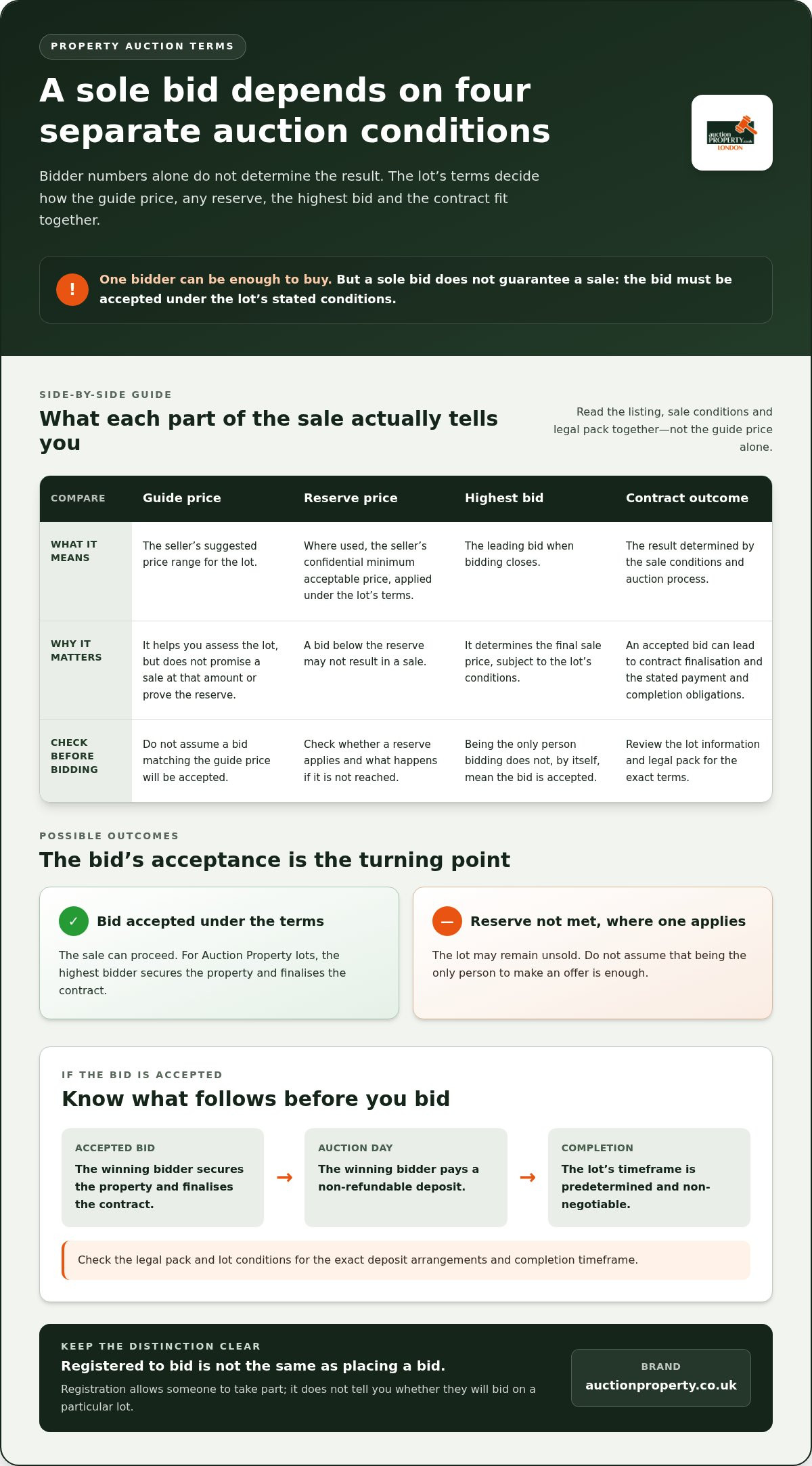
A sole bid cannot be assessed by looking at one figure alone. The guide price frames the listing, a reserve may set a minimum acceptable sale price, and the highest bid determines the final sale price subject to the lot’s terms. If the sale proceeds, the contract sets out what follows.
| Term | What it means | Why it matters to a sole bidder |
|---|---|---|
| Guide price | Auction Property describes this as the seller’s suggested price range. | It helps you consider the lot, but it is not a promise of the sale price or proof of the reserve. |
| Reserve price | Where a lot has a reserve, it is a seller-set minimum price, subject to the auction’s terms. | A bid below it may not result in a sale. |
| Highest bid | The leading bid when bidding closes. | It determines the final sale price, subject to the lot’s conditions. |
| Contract outcome | The result set by the lot’s sale conditions and auction process. | An accepted bid can lead to contract finalisation and the stated payment and completion obligations. |
Guide price and reserve price are not interchangeable
A guide price is an indication of the seller’s suggested price range. A reserve, where used, relates to the seller’s minimum acceptable price. For a lot with a reserve, the reserve price is the seller’s confidential minimum acceptable price, as applied under that lot’s auction terms. Do not infer the reserve from the guide price or assume the seller will accept a bid simply because it matches it. Review the listing and legal pack to understand the information and conditions that apply to the property.
Auction procedures can differ, so rely on the published rules for the specific sale rather than assuming that one process applies to every property auction. The lot’s terms should explain how any reserve affects the result and what happens if bidding does not reach it. If the wording is unclear, make sure you understand it before bidding.
From accepted bid to contract and completion
For Auction Property lots, the stated process is that the highest bidder secures the property and finalises the contract. The winning bidder pays a non-refundable deposit on the auction day. Completion follows the timeframe set for the lot, which is predetermined and non-negotiable.
That makes the terms essential reading before you bid, not paperwork to consider afterwards. Check the legal pack and lot conditions for the exact obligations, including the deposit arrangements and completion timeframe. If you’re asking what happens if I am the only bidder, the practical answer still turns on whether your bid is accepted under those conditions. Review the property auction listings alongside the lot information so you can assess the guide price and sale requirements before bidding.
Is bidding against a sole bidder allowed? Separate auction rules from rumours
Auctioneers do not all follow identical bidding procedures, so do not assume that every bid has the same status or that every auction permits the same practice. The auction conditions and published bidding rules explain what the auctioneer may do, how bids are called and how the result is determined. Read those rules before bidding, particularly if you are concerned that bidding may continue when no other buyer is visibly competing.
Separate two questions: what the published rules permit, and what you can infer from the bidding you observe. A bid made under the auction’s disclosed process is different from an unsupported assumption that an unseen competitor is bidding. A quiet room, a pause or a rising bid alone does not establish who made a bid or why. Use the stated procedure, not speculation, to decide whether to continue.
What does ‘bidding off the wall’ mean?
“Bidding off the wall” is a phrase used to describe an auctioneer calling bids when no other bidder is visibly making them. Some competitor guidance raises the possibility of such bids being used to move bidding towards a reserve. That description should not be treated as a universal UK rule, proof of misconduct or confirmation that a particular auctioneer uses the practice.
The key point is whether the auction’s terms explain and permit the relevant bidding procedure. A reserve, where applicable, is governed by the specific lot conditions. Do not assume that the presence of a reserve automatically authorises any particular type of bid. Equally, do not conclude that a bid is improper simply because you cannot see another bidder. Check the published rules and how bids are announced.
How to assess bidding transparency before the auction
Before the sale, read the auction conditions and the lot’s terms. Look for wording about the auctioneer’s bidding authority, reserve prices, how bids are recognised and what happens if the reserve is not reached. If a term is unfamiliar, establish what it means in that auction’s context before you register or bid. The aim is to understand the process, not to assume the worst.
Keep your focus on the documents that govern the property auction you are considering. General descriptions of auction practices can provide background, but they do not replace the published rules or lot-specific conditions. Use those documents to understand how bids may be made and how the result will be determined.
If a rule remains unclear, pause before bidding and get an explanation, for example from a solicitor reviewing the legal pack. Then set your limit based on your assessment of the property, not pressure to answer what happens if I am the only bidder. If bidding moves beyond that limit, stop. The terms should inform your decision; they do not require you to keep bidding.
What should you do if you are the only bidder?
Focus on the property and its terms, not the lack of visible competition. A sole bid can still lead to a purchase, so prepare as if you may need to proceed if your bid is accepted. Use this checklist before the auction and while bidding.
Before bidding: prepare for the lot, not the crowd
- Review the listing. Note the guide price and the lot’s stated auction date and time. Treat the guide price as an indication, not a valuation or a guarantee of the final sale price.
- Read the legal pack and auction conditions. Check for property-specific obligations, the bidding process and any reserve-related terms. If a legal point is unclear, get it explained before you bid.
- Assess the property independently. Consider its condition, suitability and the implications of the documents. A quiet auction does not prove that a property is good value or remove the need for due diligence.
- Confirm the financial and timing commitments. Understand the lot’s payment requirements, including the non-refundable deposit due on the auction day if you win, and the predetermined, non-negotiable completion timeframe.
- Set your maximum in advance. Base it on what you can afford and your assessment of the property. Do not raise your limit simply because no competitor is visible or because you think the seller expects more.
These checks matter to sellers as well as buyers. A seller’s price expectations and preparation shape the auction, but they do not determine what a particular buyer should pay. The seller-focused guidance on selling a house fast at auction in the UK provides that complementary perspective. Keep your own decision grounded in the lot information and your circumstances.
During and after a sole-bid auction
- Follow the published process. Make bids as set out in the auction rules, and pay attention to how the auctioneer confirms the current bid and the lot’s result.
- Stick to your limit. If the bidding reaches your maximum, stop. Do not treat a lack of competition as a reason to stretch your budget.
- Respond to the outcome. If your bid is accepted, follow the lot’s contract, deposit and completion requirements. If the property is not sold, a post-auction discussion may be possible depending on the circumstances, but a deal is not guaranteed.
Before the auction, make sure you understand the process from bidding through to the result. The overview of how property auctions work can help you prepare. If you’re ready to assess a lot, explore property auction listings and review the relevant documents before deciding whether to bid.
How to follow an Auction Property lot when you may be the only bidder
Follow the lot from its listing through to the scheduled auction rather than relying on assumptions about how many people might bid. The listing provides the guide price and the auction schedule for that specific property. Use those details to plan, then read the legal pack and sale conditions before deciding whether to take part.
Use the lot information to plan your next step
Start with the individual lot page. Note the auction date and time shown there, and check for updates to the listing or documents as you prepare. The guide price is the seller’s suggested price range, not a guaranteed final sale price or a promise that a bid at that level will be accepted.
Read the legal pack and lot-specific terms carefully. Identify the conditions that affect your decision, including how bids are handled and what happens if your bid is accepted. Consider the property on its own merits, then set a maximum based on what you can afford and your assessment of the lot. The number of visible bidders cannot tell you whether the property is suitable, what it is worth to you or whether the sale conditions are met.
Watch the auction and be ready to act
Auction Property provides a live stream so you can watch the auction and follow the lot’s progress. Watching the live stream lets you follow proceedings, but it does not itself register you to bid. If you intend to bid, use the website’s bid-registration route and follow the instructions for participating in the scheduled auction.
Keep your documents and decision-making aligned. Follow the published bidding process, watch for the auctioneer’s confirmation of the lot’s result, and do not exceed your pre-set limit just because no competitor is apparent. If your bid is accepted under the lot’s terms, the highest bidder secures the property and finalises the contract. The buyer pays a non-refundable deposit on the auction day and must meet the lot’s predetermined, non-negotiable completion timeframe. Be ready for those commitments before you bid.
If the property is not sold, a separate post-auction route may be possible depending on the circumstances, but it is not guaranteed. Keep the lot information to hand so you can understand the outcome and make a measured next decision. Knowing what happens if I am the only bidder starts with following the specific lot, understanding its terms and being prepared to act within your limit.
To take the next step, view available lots and register to bid after reviewing the relevant listing and documents.
Make your next move with a clear plan
The question “what happens if I am the only bidder” is easier to manage when you decide your boundaries before the auction begins. Treat bidding as one part of a larger property decision: know what you are prepared to commit to, what would make you step back, and which details you still need to understand. Whether navigating an auction or consulting residential buyer specialists like kombrink.com in traditional home sales, clear valuation criteria ensure you act calmly, whether the lot attracts other bids or not.
Auction Property’s lot information gives you a practical starting point for comparing opportunities and deciding which properties deserve closer attention. Review the details, then move forward when the property and its terms fit your plans. Do not let a quiet room or a fast-moving auction make the decision for you.
View our lots and register to bid when you’re ready to take the next step. Go into the auction informed, stay within your limits, and approach the opportunity with confidence.
Frequently Asked Questions
Is being the only registered bidder the same as being the only bidder?
No. Registration means someone is eligible to participate under the auction’s process; it does not mean they have placed a bid. Several people could be registered but only one may bid on a particular lot. Another participant may also bid later in the auction. Follow the bidding as it happens and rely on the auctioneer’s announcements rather than assuming registration figures show how many people are competing.
Can an auctioneer accept a bid below the reserve price?
It depends on the lot’s conditions and the seller’s instructions. A reserve generally sets the minimum price at which the seller is prepared to sell, but the specific auction rules determine how bids around that figure are handled. Do not assume a below-reserve bid will be accepted, or that it can never be accepted. Read the sale conditions and rely on the auctioneer’s confirmed result for that lot.
Does a guide price mean the property will sell for that amount?
No. A guide price indicates the seller’s suggested price range; it does not guarantee the eventual sale price or confirm that a bid at that level will be accepted. A bid matching the guide price may not be enough if the lot’s sale conditions require a higher threshold. Compare the guide price with the property details and your own assessment, and do not treat it as a promise from the seller.
Can I watch a property auction without placing a bid?
Yes. Auction Property provides a live-stream option for watching auctions, so you can follow proceedings without placing a bid. Watching does not register you to bid. If you decide to participate, use the website’s bid-registration route and follow the instructions for the relevant auction. Check the lot’s scheduled date and time so you know when to tune in.
What happens if nobody bids on a property at auction?
If no one places a bid, the lot generally remains unsold at that auction. The seller may consider what to do next, which could include a post-auction discussion, but there is no guarantee the property will remain available or that an offer will be accepted. If you are interested, note the lot’s status and follow the auction’s stated process for enquiries after the sale.
Can I change my mind after my bid is accepted?
Do not assume you can withdraw without consequences. Whether an accepted bid creates a binding commitment depends on the auction format and the lot’s terms. Review the legal pack and sale conditions before bidding, and make sure you are ready to meet the stated requirements if you win. Auction Property states that the winning bidder pays a non-refundable deposit on the auction day, so make your decision before bidding.
Why might a property attract only one bidder?
There may be several reasons, and bidder numbers alone do not reveal the cause. The guide price or seller’s expectations might not match a buyer’s assessment. The property’s condition, legal pack or completion requirements may also affect interest. Timing and the number of buyers looking for that specific property type can play a part too, especially for niche builds like those showcased by Arrowhead Realty Company that naturally appeal to a narrower pool of purchasers. Treat low competition as a reason to assess the lot carefully, not as proof that it is a bargain.