
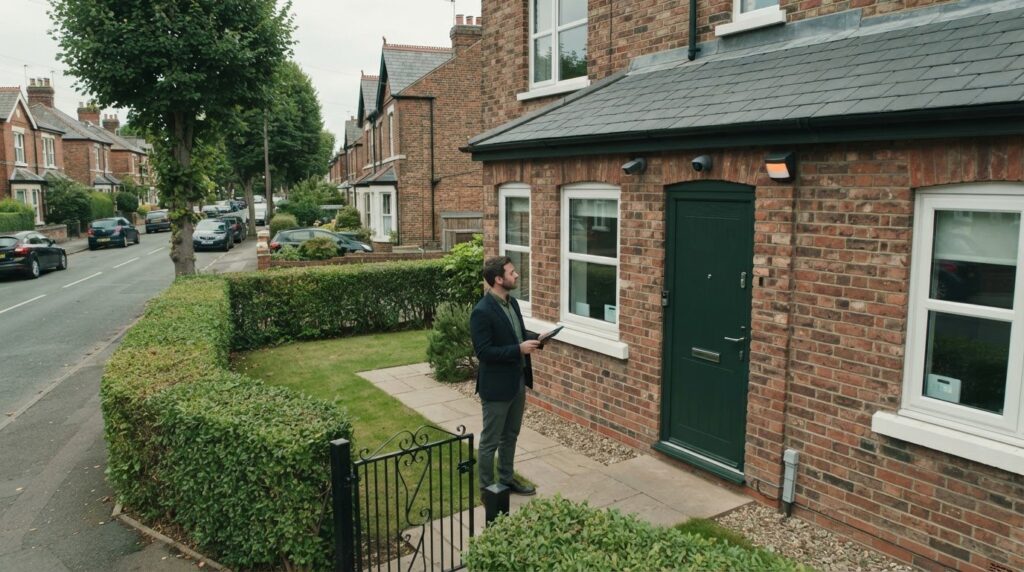
A newly purchased empty property needs more than a locked door: secure entry points, arrange regular inspections and understand your insurance conditions. If the home will be vacant for more than 30 consecutive days, check whether your policy sets specific requirements, including how often the property must be inspected. That’s the practical starting point for how to secure an empty property after purchase.
An unoccupied home can be vulnerable to intrusion, damage and problems that go unnoticed, so it pays to make a security plan as soon as you take ownership. This guide explains practical ways to deter theft and vandalism, protect the property, and organise inspections or remote monitoring. It also covers heating and power, emergency planning and when professional vacant-property security may be useful. Tailor your routine to the length of the vacancy and the risks at the property.
Key Takeaways
- Check your home insurance conditions if the property will be empty for more than 30 consecutive days, including any inspection requirements.
- Secure doors and windows, manage visibility from outside and keep the garden and boundaries tidy to reduce signs that the home is unoccupied.
- Set a regular inspection routine to spot leaks, damp, pests and storm damage before small issues worsen.
- Plan how alarms, cameras and heating will operate, especially if the property relies on power to protect it through winter.
- For a long-term vacancy or a property at heightened risk, consider whether professional vacant-property security is appropriate.
1. How Vacant Property Security Works in Practice?
Immediately after buying an empty property, secure the doors and windows, tell your insurer it will be vacant, and check the policy conditions. If it may remain empty for more than 30 consecutive days, confirm what cover and inspection arrangements apply before that period begins.
A property’s vacancy can affect the cover available under its insurance policy. A policy for an occupied home may set conditions or limits once it becomes unoccupied, so don’t assume your existing cover remains suitable after completion. Working with an independent specialist such as WS Insurance Brokers can help ensure you obtain the right cover for your situation. Tell your insurer when the property became empty, how long you expect it to remain vacant and whether anyone will visit. Ask for the applicable terms in writing and keep them with your property records.
Read the policy for specific vacancy conditions, not just the general summary. Check how it defines an unoccupied property, when additional requirements begin, and what it says about inspections, heating or water. The exact wording matters. For example, the policy may require recorded inspections once the property has been vacant for a specified period. Note the required actions and dates, then arrange visits to meet those conditions.
- Check the cover: Confirm that the policy provides an appropriate level of cover for an empty property.
- Check inspections: Find out whether the insurer requires visits and what each inspection must include.
- Record arrangements: Keep policy documents, inspection notes and insurer communications together.
Build basic property protection around the policy requirements. Keep the garden tidy, arrange for the grass to be cut and bushes trimmed, and ensure bins are emptied and put away. This reduces visible signs of neglect and keeps access routes clear. For a long vacancy, arrange for a professional to fully drain the water system. Insulate exposed pipes, particularly in lofts, garages and other unheated spaces, to reduce the risk of freezing.
Use ventilation and routine maintenance to protect the building and its contents. Keeping trickle vents open can support airflow, while clearing gutters and downpipes helps prevent blockages and overflow. Remove food and clean the property before it stands empty. Seal gaps around doors, vents, pipework and the roofline to discourage pests. If there is damp, a dehumidifier can help remove excess moisture.
Keep a simple record from the date of purchase: note the insurer’s vacancy conditions, each inspection and any maintenance completed. This makes it easier to follow the policy while deciding how to secure an empty property after purchase. Review the plan if the vacancy lasts longer than expected, so it continues to reflect both the policy conditions and the property’s needs.
2. Preventing theft, arson, vandalism, squatting and fly-tipping
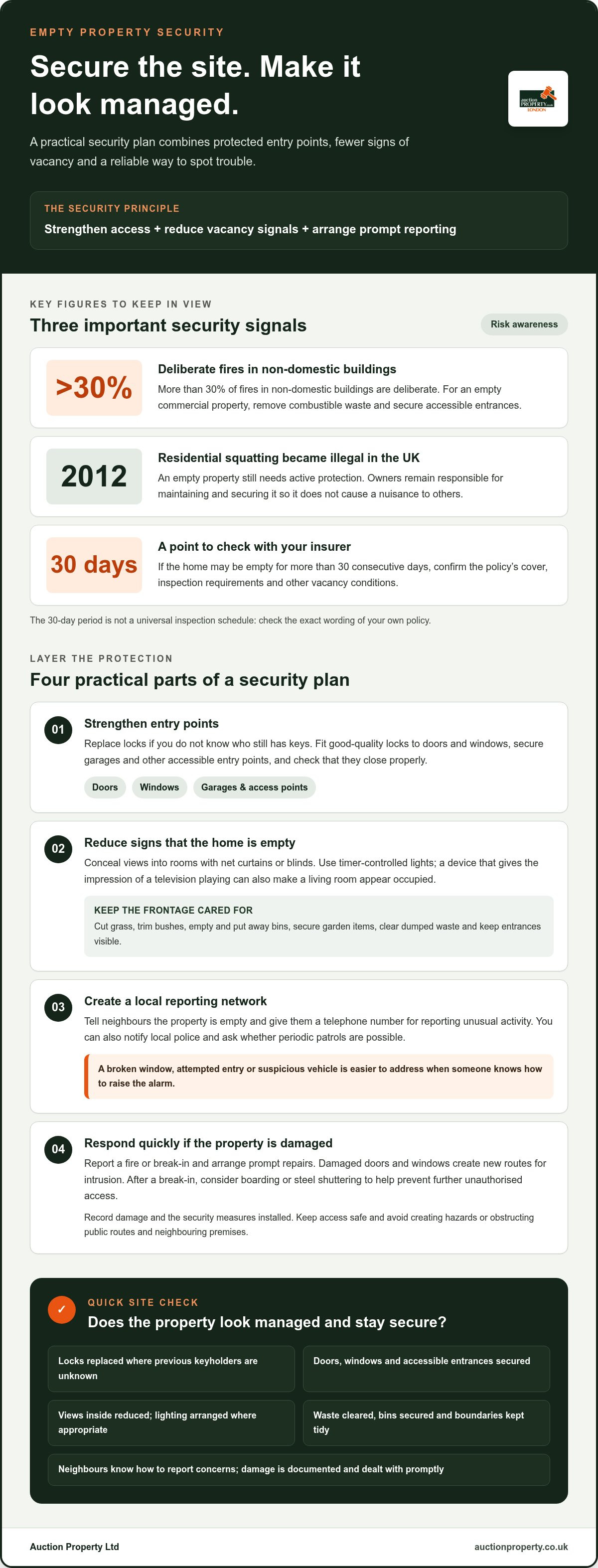
For temporary protection, change the locks, fit good-quality locks to doors and windows, conceal views into the property and use timer-controlled lights. A device that gives the impression of a television playing can also make a living room appear occupied.
After taking ownership, replace the locks if you don’t know who still has keys. Secure accessible windows, doors, garages and other entry points, then check that each closes properly. Net curtains or blinds reduce visibility into rooms, while security lighting can illuminate dim areas around entrances. Removing valuable furnishings or equipment to secure self-managed units such as SafeHouse Storage also ensures belongings remain protected rather than attracting opportunistic thieves. Keep the outside clear of loose items that could be used to damage the property or obstruct access.
Deterrence also depends on local awareness. Tell neighbours that the property is empty and give them a telephone number to report unusual activity. You can notify the local police and ask whether periodic patrols are possible. These steps may help someone spot a broken window, attempted entry or suspicious vehicle before a problem goes unnoticed.
Residential squatting became illegal in the UK in 2012, but an empty property still needs active protection. Owners remain responsible for maintaining and securing it so it doesn’t cause a nuisance to others. Keep access areas clear and deal promptly with dumped waste. The Occupier’s Liability Act 1984 may make an owner liable if an unauthorised trespasser is injured because of the owner’s negligence. Avoid leaving hazards that could injure someone entering the site.
Boarding or steel shuttering can help prevent unauthorised access after a break-in. These measures go beyond ordinary locks, so consider the property’s condition and whether the work could create hazards or affect safe access. Record any damage and the security measures installed. If the property borders a public route or neighbouring premises, ensure the work does not obstruct access or cause a nuisance.
To deter fly-tipping and vandalism, make the site look managed rather than abandoned. Remove dumped material promptly, secure bins and garden items, and keep entrances visible. A neglected frontage can attract further dumping; clear boundaries make fresh damage easier to spot during visits.
More than 30% of fires in non-domestic buildings are deliberate. For an empty commercial property, remove combustible waste and secure accessible entrances. If a fire or break-in occurs, report it and arrange prompt repairs; damaged doors or windows leave new routes for intrusion.
Combine the measures: strengthen entry points, reduce signs that the property is vacant, and establish a reliable way to report concerns. If someone breaks in, reassess the site promptly and consider boarding or steel shuttering to prevent further unauthorised access.
3. Property inspections and open/lock-up services
There is no single inspection interval for every empty UK property. Follow the schedule and conditions in your insurance policy, and record each visit so you can show that you followed the required routine.
Use a consistent inspection route rather than relying on a quick glance through the doorway. Check each room, the loft where it is safe to access, utility spaces, entrances and the outside of the building. Look for leaks, condensation, damp patches, unusual smells, pests and storm damage. A musty smell near a ceiling, for example, may prompt a closer check for a roof leak.
At each visit, compare the property with the previous inspection record. Note new marks, changes in smell, water staining, damaged locks or signs of entry. Photograph relevant changes and record the date, time and action taken. If you find a leak, note its location and arrange a prompt response rather than waiting for the next scheduled visit.
Plan the opening and locking routine before anyone visits. Give the designated keyholder clear instructions on which doors to use, how to operate any alarm, and which rooms or utilities to check. Record who holds keys and update the list when access changes. Before leaving, confirm that windows are shut, doors are locked and the alarm is set, if fitted.
If you visit every few weeks to work on a vacant home, combine maintenance with a thorough inspection. Use a consistent checklist: completing a repair should not mean overlooking condensation in a bedroom or storm damage outside. If you cannot attend personally, ensure the person carrying out the checks follows the same route and reporting process.
- Inside: Check ceilings, corners, under sinks and around appliances for moisture, staining or unusual smells.
- Entry points: Test doors and accessible windows, and look for damage or signs of attempted entry.
- Outside: Look for fallen branches, broken glazing, storm damage and signs of pests.
- After the visit: Secure the property, set the alarm if available, and log findings and follow-up actions.
Use inspection notes to identify patterns. A damp patch that returns in the same place may indicate an unresolved issue, while repeated condensation suggests ventilation needs attention. Keep records alongside insurer instructions, maintenance notes and photographs. This creates a useful timeline if you need to explain when a problem appeared or what steps you took.
Make the inspection frequency practical for the property’s condition, the length of the vacancy and the policy requirements. A home with a known leak needs closer attention than one without a reported maintenance issue. Review the routine after circumstances change, such as severe weather, repairs or a longer-than-planned vacancy.
4. Remote monitoring, power needs and emergency response
Remote monitoring can help you spot a problem between property visits, but it depends on reliable power and a clear response plan. Keep alarms and CCTV active, test that they work correctly, and decide who will act on an alert. A camera recording on a 72-hour loop is one example of how footage can be retained for later review.
Some vacant-property alarm systems connect to 24-hour monitoring services. Monitoring can flag an alarm event, but someone still needs to respond, access the property and arrange action. Set out who holds keys, who receives notifications and how they can reach the property. Keep those instructions current if access arrangements change.
The cost of locksmith, alarm and CCTV work depends on the property and equipment, with the price provided after a quote request. Factors include the lock type, number of entry points, camera coverage, alarm features and monitoring arrangements.
Plan heating around the season and the building’s water system. Throughout winter, keeping heating at around 12–15 °C can help prevent pipes from freezing. A timer set to a low level can maintain heat while avoiding the need to keep the property warm for occupation. Insulate exposed pipes, particularly in lofts, garages and other unheated spaces.
A burst pipe can cause extensive damage if it goes unnoticed. During inspections, check under sinks, around boilers and near visible pipework for leaks or water marks. Know where the stopcock is and ensure the person with access knows how to use it. For a long vacancy, it is advisable to have a professional fully drain the water system.
Damp needs attention as well as heating. Keep trickle vents open to support ventilation, and use a dehumidifier if there is excess moisture. During visits, check for condensation, damp patches and unusual smells. These signs can point to a developing issue that needs investigation before it spreads.
Include utilities, mail, keys and personal information in the same plan. Turn off appliances that do not need to stay powered, while keeping essential alarm or monitoring equipment connected. Arrange for mail to be collected or redirected so it does not build up at the door. Store spare keys securely, limit access to named keyholders, and remove paperwork containing personal details.
Prepare a simple emergency plan: identify the issue, contact the keyholder, prevent further damage where safe, and record what happened. For a leak, the keyholder can use the stopcock and arrange urgent attention. For an alarm failure or power interruption, specify who will visit and restore essential protection.
Before leaving, test the alarm and cameras, check the power supply to essential systems, confirm the heating settings, and share response instructions with the keyholder. Both a working system and a named person responsible for action are essential.
5. Professional vacant-property security
Professional security may help when a property will remain empty for a long time or has risks that ordinary precautions cannot address. Security companies can provide vacant-property solutions, including interlinked alarms. The aim is to pair suitable equipment with a clear plan for responding when it activates.
Start by identifying the property’s main vulnerabilities. A detached house with several accessible entrances needs a different setup from a commercial building with one secure entrance. Note weak doors, concealed access points, previous damage and essential systems that rely on electricity. Share these details with the security company so its proposed measures address the actual risks.
Interlinked alarms can connect detection points across a property, allowing an alert in one area to reach other linked devices. Consider how the alarms will work with existing CCTV, power supplies and access arrangements. A system is useful only if it remains operational and someone knows how to respond to an alert. Assign a keyholder and document the response steps.
- Map access: Identify doors, windows, outbuildings and other vulnerable entry points.
- Review detection: Decide which areas need alarms and whether devices should be interlinked.
- Plan response: Name the person who can attend and explain how they’ll gain access.
- Check operation: Include alarm testing and power checks in the property’s maintenance routine.
Match professional support to the vacancy and the risks. A short gap before renovation may call for a straightforward alarm plan. A long-term empty building with repeated access attempts may need layered protection, such as stronger physical barriers alongside linked alarms. Review the arrangements after a break-in, building work or a change to occupancy plans.
Set clear expectations before installation or monitoring begins. Agree which parts of the property are covered, how the system signals an alert, who receives it and what action follows. Confirm how authorised visitors should enter without triggering unnecessary alarms. Keep a written record of these arrangements for every keyholder.
Professional security works best alongside property checks, not instead of them. An alarm can report an event, but it will not identify every leak, damp patch or storm-related problem. Keep the inspection schedule, maintenance records and emergency contacts accessible to the person responsible for the property.
Review the setup whenever the building changes. Renovation can create new entry routes, while a disconnected power supply can affect alarms or cameras. Before work starts, identify which devices need power and how workers will access the site. After the work, test the system and update the access instructions.
The practical takeaway is to treat vacant-property security as a joined-up plan: assess the site, choose suitable alarm coverage, assign a response contact and maintain the system. For a long vacancy, professional input can help coordinate separate security measures.
Auction Property: Residential Property Auctions
Auction Property offers Residential Property Auctions for owners considering their next move after securing a purchase. If the empty home no longer fits your plans, selling it at auction may be an option to explore. Start by considering the property’s condition and the documents available to prospective buyers.
Auction Property also offers Commercial Property Auctions, Land and Development Site Auctions, and Legal Pack Provision. These options may be relevant if your plans involve a commercial property or development site rather than a residential home. Consider which route matches your situation and what information you need to make a decision.
To discuss your property plans, contact Auction Property or visit auctionproperty.co.uk.
Choose the Next Step for Your Property
Once your security plan is in place, decide what you want to do with the property. You might be preparing it for renovation, holding it as an investment or considering a sale. That decision shapes the next steps, from setting a project timeline to organising documents a future buyer may need.
If selling is the right direction, consider whether an auction fits your plans. Auction Property offers Residential Property Auctions, Commercial Property Auctions and Land and Development Site Auctions. These options suit different property types and sale objectives. Choose the route that aligns with your intended outcome rather than leaving the property’s future undecided.
A clear plan makes it easier to apply what you’ve learned about how to secure an empty property after purchase, while keeping your longer-term property goals in view. Take the next step when you’re ready: contact Auction Property Ltd for advice. With a defined direction, you can move forward with greater clarity and confidence.
Frequently Asked Questions
How Vacant Property Security Works in Practice?
Start with a handover record: note the date you took possession, photograph existing damage and list outstanding repairs. This gives you a baseline for later inspections and helps distinguish existing issues from new ones. Then assign responsibility for access, maintenance decisions and urgent notifications. For example, a keyholder should know who can authorise action if a newly discovered problem needs attention before you can visit.
Do I need specialist unoccupied property insurance, and what conditions apply?
Specialist cover may be appropriate, but the key requirement is insurance suited to the property’s vacant status. Tell your insurer about the vacancy and read your policy’s definition of an unoccupied home, exclusions and required precautions. Policies may impose conditions after a property has been empty for more than 30 consecutive days, including inspection requirements. The applicable terms are those in your own policy, so keep them accessible to anyone responsible for the property.
How can I find a keyholding, property management or vacant-property inspection service near me?
First decide which task you need: holding keys, carrying out inspections, or managing wider property responsibilities. Search using that exact service phrase alongside your postcode or town, then compare the written scope with your needs. For instance, a keyholding arrangement may cover access, while an inspection service may provide visit records. Set out the property’s access instructions, reporting expectations and emergency contacts before arranging any service.