

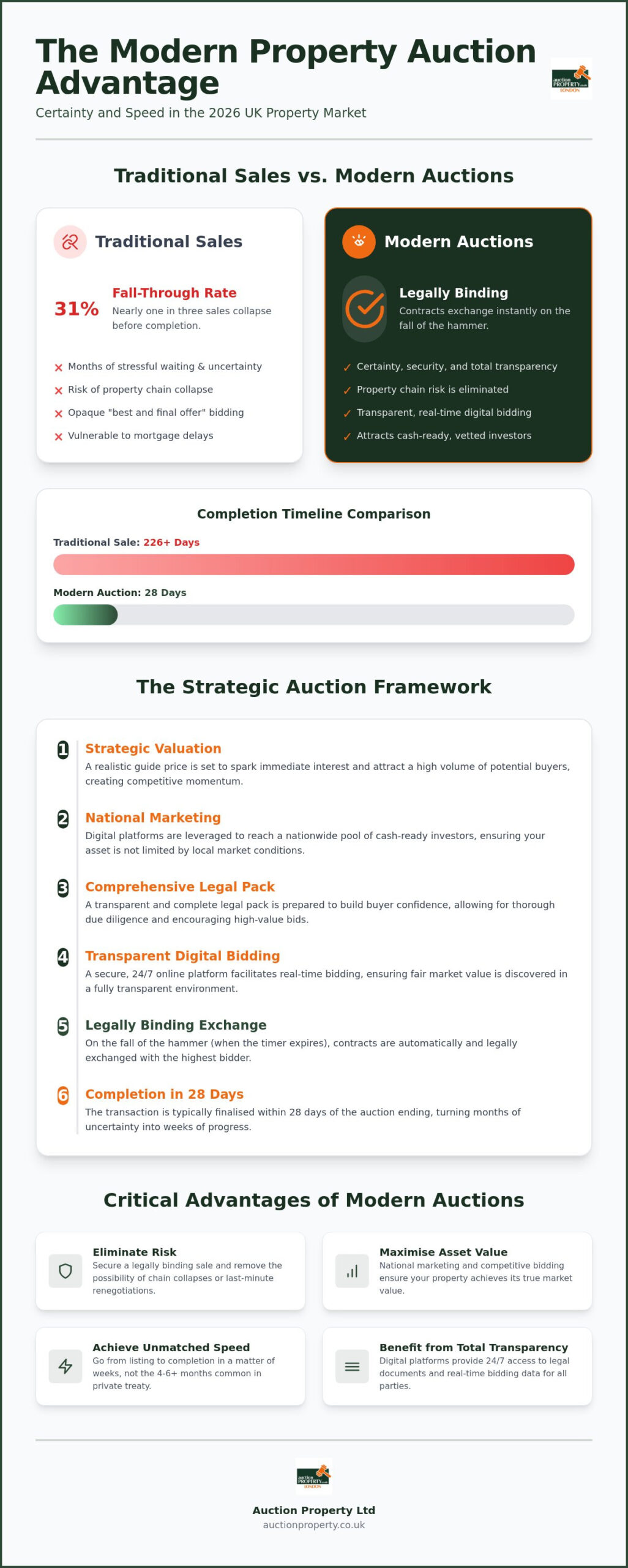
Did you know that 31% of traditional property sales fall through before completion, often after months of stressful waiting? In the current 2026 market, the average traditional transaction drags on for over 226 days, leaving both buyers and sellers trapped in a state of expensive limbo. Professional property auctioneers provide a decisive alternative to this stagnation, stripping away the uncertainty that plagues the private treaty market. You’ve likely experienced the frustration of opaque bidding wars or the fear of a property chain collapsing at the last minute. It’s a common pain point that costs time, money, and opportunity.
This guide promises to show you how to bypass these hurdles by facilitating secure, high-speed transactions for residential and commercial assets across the UK. You’ll discover how to achieve a legally binding exchange of contracts on the fall of the hammer, with completion typically finalised within 28 days. We will preview the latest 2026 Anti-Money Laundering regulations, explain the mechanics of transparent digital bidding, and provide a clear roadmap for navigating the auction process with total confidence. Stop settling for market delays and start executing your property strategy with precision and speed.
Key Takeaways
- Understand how modern property auctioneers have transitioned to nationwide online platforms to ensure maximum transparency and speed for every transaction.
- Discover how to secure a legally binding exchange of contracts on the fall of the hammer, effectively eliminating the risk of property chain collapses.
- Learn the strategic importance of professional valuations and national marketing campaigns in attracting a pool of cash-ready investors.
- Identify the critical criteria for selecting a top-tier auction house, focusing on national reach and transparent fee structures for 2026.
- Master the step-by-step framework for navigating the auction process, from approving the legal pack to achieving completion within 28 days.
The Evolution of Property Auctioneers in 2026
A modern property auctioneer is a strategic, tech-enabled facilitator bridging the gap between high-value assets and global capital. The traditional image of the dusty town hall auction room has been replaced by sophisticated digital platforms. These systems allow for a secure, transparent environment where residential and commercial properties are traded with surgical precision. This shift toward exclusive digital platforms is mirrored in other high-value markets; for instance, Creative Deal provides an invitation-only marketplace for UAE property owners to connect with licensed brokers. In 2026, the demand for certainty is at an all-time high, and the role of the auctioneer has evolved from a simple caller to a data-driven partner in the transaction process, ensuring that both buyers and sellers operate from a position of strength and clarity.
Traditional private treaty sales are currently failing at record rates. Industry data shows that roughly 31% of transactions collapse before completion, often due to chain breaks or mortgage delays. Property auctioneers eliminate these variables by providing a platform where every bid is visible and every commitment is legally binding. This shift isn’t just a trend; it’s a structural response to a market that no longer tolerates friction. By front-loading the legal and financial checks, auctioneers ensure that only serious, vetted bidders enter the arena, significantly reducing the UK’s high property fall-through rates.
Digital-First Auctioneering vs. Traditional Methods
Online platforms provide 24/7 transparency, allowing national buyers to perform due diligence at their own pace. By removing geographic barriers, a property in the North West can attract an investor from London or overseas without requiring a single physical visit to a crowded room. These platforms leverage auction theory to ensure fair market value discovery through real-time bidding data. This transparency builds trust because every participant sees exactly what the competition is doing. You don’t have to wonder if a higher bid actually exists; the data is right there on your screen in real-time.
Why Speed is the New Currency in UK Real Estate
Time is the greatest risk factor in any real estate transaction. While the traditional market struggles with a 4-6 month average timeline, the auction model delivers a 28-day completion standard. This speed is underpinned by the immediate exchange of contracts on the fall of the hammer. In a digital context, the binding nature of the gavel refers to the instant, automated execution of a legal contract the moment the timer expires on the highest bid. This mechanism forces a level of commitment that traditional estate agents simply cannot replicate, turning months of uncertainty into weeks of progress.
How Professional Auctioneers Maximise Asset Value
Maximising asset value at auction is a calculated exercise in psychological pricing and strategic exposure. Professional property auctioneers don’t just list a property; they engineer a competitive environment. This process begins with a valuation specifically tailored for the auction room. Unlike traditional estate agents who might overvalue a home to win a listing, auctioneers use realistic guide prices to spark immediate interest. This entry point acts as a catalyst, drawing in a high volume of potential buyers and creating the momentum needed for a successful sale.
Strategic marketing then amplifies this momentum. By leveraging digital platforms to reach a national pool of cash-ready investors, auctioneers ensure your asset isn’t limited by local market conditions. This wide-reaching exposure is critical for driving prices upward. During the live bidding phase, the auctioneer manages the floor to encourage rapid, incremental bids, ensuring the final price reflects the true market demand. Throughout this, the reserve price remains a confidential safety net, protecting your interests by ensuring the property doesn’t sell for a penny less than your agreed minimum.
Diverse Asset Classes: Residential, Commercial, and Land
Different properties require distinct positioning to attract the right capital. Residential family homes are often marketed for their speed and chain-free status, while commercial units are sold on their yield potential and tenant strength. Land and development sites require a more technical approach, involving professional appraisals that highlight planning permissions and site potential. By tailoring the narrative to the specific asset class, auctioneers unlock maximum value from yield-seeking investors and developers alike.
While this guide focuses on the UK, investors often look globally for high-yield assets; for instance, Aqaro specializes in residential and commercial properties across Oman, offering a different regional perspective on property investment.
The Legal Pack: Building Buyer Confidence
In 2026, transparency is the primary driver of high-value bids. A comprehensive legal pack is essential for building buyer trust. It includes title deeds, office copies, local authority searches, and any relevant planning documents. By resolving potential title issues or restrictive covenants before the auction begins, you remove the administrative friction that causes traditional sales to stall. This upfront clarity gives bidders the confidence to bid aggressively, knowing exactly what they’re buying. Providing a robust legal pack provision is a strategic move that directly correlates with higher success rates and stronger final prices.
Criteria for Selecting Top-Tier UK Property Auctioneers
Selecting a partner to manage a high-stakes real estate transaction requires more than a cursory glance at a local high street presence. In 2026, the best property auctioneers are defined by their ability to project an asset across the entire UK market, rather than being confined to a single regional pocket. You need a firm that combines technical sophistication with a deep understanding of complex legal disposals. Whether you are handling a standard residential sale or a sensitive probate matter, the infrastructure behind the auction house determines the finality and success of the outcome.
Evaluate the firm’s track record with corporate disposals and institutional sellers. These entities demand a level of diligence and reporting that standard agencies cannot provide. A top-tier auctioneer will have established protocols for vetting bidders and securing deposits instantly; this ensures the certainty promised isn’t just a marketing slogan but a functional reality. Demand to see evidence of their national reach and the security of their transaction protocols before committing your asset to their platform.
National Reach vs. Local Expertise
A national platform creates a far more aggressive and diverse buyer pool than a local auction room. By centralising operations in a hub, such as London, firms can attract international capital and institutional investors who are specifically looking for UK-wide opportunities. This scale is vital for choosing the right auction house uk because it ensures your property isn’t subject to the whims of a localized economy. High-value transactions benefit from this broader exposure, turning a regional asset into a national prospect for cash-ready investors.
Fee Transparency and Value for Money
Transparency is the bedrock of the auction model. In 2026, professional property auctioneers provide clear, upfront breakdowns of all costs involved. This clarity prevents post-sale disputes and builds bidder confidence. Typical fee structures include:
- Seller’s Commission: This covers marketing, valuation, and professional caller fees, usually payable only upon a successful sale.
- Buyer’s Administration Fee: This fixed fee justifies the cost of the secure digital bidding infrastructure and mandatory AML compliance checks.
- Premium Fees: Often used in “zero-fee” models where the buyer covers the commission, though this must be balanced against potential bid suppression.
When comparing these figures, consider the “hidden costs” of the traditional market. A sale that takes six months and then falls through carries a heavy price in lost interest, council tax, and maintenance. The speed of the auction method often makes it the most cost-effective route, even when the nominal fees appear higher than a standard estate agent’s percentage. Efficiency is the ultimate value for money in real estate.
Finally, scrutinize the digital bidding infrastructure. In an era of increasing cyber threats, your auctioneer must employ bank-grade security protocols for fund transfers and data protection. The platform should offer a seamless user experience that doesn’t glitch during the final seconds of a high-pressure bidding war. Reliability is non-negotiable; a technical failure at the point of sale is a catastrophic risk that only the most modern facilitators have mitigated.
Navigating the Auction Process: A Strategic Framework
Success in the auction room isn’t a matter of luck; it’s the result of a disciplined, sequential workflow. Professional property auctioneers act as the conductors of this process, ensuring every milestone is met with precision. For a transaction to complete within the 28-day standard, preparation must begin weeks before the first bid is cast. This framework removes the administrative friction that causes traditional sales to stall, replacing it with a structured path to a guaranteed outcome.
The marketing period is where the momentum builds. During this phase, your auctioneer hosts targeted viewings and, crucially, vets potential bidders. In the 2026 market, vetting goes beyond a simple “expression of interest.” It involves verifying proof of funds and ensuring all participants have cleared mandatory AML checks. This rigorous screening ensures that when the live digital bidding stream goes active on auction day, the room is filled with serious, capable capital rather than speculative browsers.
Seller Strategy: Preparing for the Gavel
Your strategy starts with data-backed realism. Use a professional appraisal to establish a guide price that generates maximum interest while setting a confidential reserve price that protects your bottom line. If you need to sell house fast at auction uk, full disclosure is your most powerful tool. Approving a comprehensive legal pack early prevents post-sale disputes and gives buyers the confidence to bid to their limit. Any ambiguity regarding title boundaries or restrictive covenants will only serve to suppress the final hammer price.
Buyer Strategy: Due Diligence and Bidding
For buyers, speed must be matched by meticulous due diligence. Review the legal pack with a solicitor well before the auction date. In 2026, pay close attention to the Material Information disclosures, including flood risks and local authority searches. Mastering the property auction requires having your finances in place before the timer starts. While traditional mortgages are possible, many successful bidders utilise bridging loans to meet the strict 28-day completion deadline. This liquidity allows you to act with the same decisiveness as a cash buyer.
Once the hammer falls, the transition to the completion phase is immediate. The digital platform automatically executes the contract exchange, and the buyer’s deposit is secured. There’s no room for “cold feet” or renegotiation. This finality is the hallmark of the modern auction process, providing a level of security that the private treaty market simply cannot replicate. To start your journey with a partner who values results above all else, contact Auction Property Ltd today for a professional consultation.
Auction Property Ltd: Your Partner for National Transactions
Auction Property Ltd operates as a high-performance facilitator in the UK real estate market. We’ve built our reputation on stripping away the administrative hurdles that traditionally stall property transactions. As modern property auctioneers, we recognise that 2026 sellers demand more than just a listing; they require a guaranteed exit strategy. Our transparent online platform serves as the foundation for this certainty, providing a secure environment where residential, commercial, and land assets are traded with absolute clarity. We don’t just host auctions; we manage the entire lifecycle of the sale to ensure a frictionless experience for every client.
Our expert team provides comprehensive support from the initial appraisal through to the final exchange. We understand that every asset class requires a specific approach. Whether you’re disposing of a high-yield commercial unit or a residential development site, our valuations are rooted in real-time market data. This precision ensures your reserve price is both competitive and protective. By combining tech-forward infrastructure with seasoned consultancy, we’ve removed the intimidation factor often associated with the auction room, replacing it with a sense of opportunity and momentum for seasoned investors and first-time sellers alike.
Our National Reach and Digital Infrastructure
We leverage our London-based hub to project local assets onto a national stage. This reach is essential for attracting the aggressive, cash-ready buyer pool discussed in previous sections. Our digital infrastructure ensures that every lot receives maximum exposure across the entire UK, bypassing the limitations of regional agencies. We prioritise security at every touchpoint, using bank-grade protocols to handle deposits and bidder verification. Expert legal administrative assistance acts as a vital trust builder, ensuring that every legal pack is robust and every transaction remains compliant with the latest 2026 regulations.
Get Started with Your National Property Sale
Starting your journey with Auction Property Ltd is a straightforward, results-oriented process. We guide first-time sellers through each administrative step, ensuring you’re never left wondering about the next move. Our goal is to move your property from “listed” to “sold” in a fraction of the time required by the traditional market. Don’t let your transaction get caught in a collapsing chain or a six-month delay. Take control of your disposal strategy by requesting a professional valuation from our expert team today. Enquire about selling your property with Auction Property Ltd and secure your 28-day completion path.
Secure Your Property Exit in 2026
The UK property market in 2026 no longer rewards those who wait on traditional, fragile chains. By partnering with professional property auctioneers, you replace months of administrative delays with a streamlined, 28-day completion standard. We’ve explored how a transparent digital platform and expert legal preparation eliminate the risks of fall-throughs, ensuring that the fall of the hammer represents a final, legally binding contract. This model doesn’t just offer speed; it provides the expert national marketing reach required to attract serious, cash-ready capital for any residential or commercial asset.
It’s time to move from uncertainty to action. Take the first step toward a guaranteed outcome by leveraging our seasoned consultancy and tech-forward infrastructure. Request a Free Professional Auction Valuation today to see how we can maximise your asset’s value on a national stage. Your property deserves the certainty of a modern transaction.
Frequently Asked Questions
What is the difference between property auctioneers and estate agents?
The primary difference lies in the legal finality and speed of the transaction. Unlike estate agents who manage private treaty sales where either party can withdraw without penalty, property auctioneers facilitate a legally binding exchange of contracts the moment the bidding ends. This eliminates the risk of gazumping or chain collapses. While an agent’s sale can take over 226 days to complete, an auction sale provides a fixed 28-day completion timeline.
Can I sell any type of property through a professional auctioneer?
Professional auction houses handle a diverse range of assets including residential homes, commercial units, and vacant land. You can also sell development sites with or without planning permission and high-yield investment properties. This method is particularly effective for assets that are difficult to value or those requiring a fast, transparent disposal. Whether it’s a standard terraced house or a complex industrial site, the competitive bidding environment works to establish true market value.
How much do property auctioneers charge for a residential sale?
Fees for a residential sale typically include an entry fee and a commission on the final sale price. Entry or catalogue fees generally range from £500 to £1,500, while commissions often sit between 1.5% and 2.5% plus VAT. You also need to account for the cost of a legal pack, which usually ranges from £300 to £600. It’s essential to check the specific terms of your chosen firm, as some may use buyer-funded models to reduce seller costs.
Is the sale legally binding as soon as the online auction ends?
Yes, the sale is legally binding as soon as the online timer expires or the hammer falls. This moment constitutes a formal exchange of contracts. The buyer is immediately liable for the 10% deposit and is legally committed to completing the purchase within the specified timeframe, usually 28 days. This immediate finality is the core advantage of using property auctioneers over traditional sale methods, providing absolute certainty for both parties involved.
What happens if my property does not reach its reserve price?
If the bidding doesn’t reach your confidential reserve price, the property is withdrawn and remains unsold. However, the process doesn’t necessarily end there. Auctioneers often negotiate with the highest bidders immediately after the lot closes to see if a deal can be reached. This post-auction activity frequently leads to a successful sale on the same day. You retain full control and aren’t obligated to sell for less than your agreed minimum.
How long does the entire auction process take from valuation to completion?
The entire process from initial valuation to completion typically takes between six and ten weeks. This includes a three to four-week marketing period to build interest and host viewings. Once the auction concludes, the completion phase follows a strict 28-day schedule. This is significantly faster than the traditional UK market, where sales often drag on for several months. Using an online platform ensures this timeline remains brisk and highly structured.
Do I need a solicitor to sell a property at auction in 2026?
You absolutely need a solicitor to sell at auction in 2026. Their primary role is to prepare the mandatory legal pack, which includes title deeds, searches, and special conditions of sale. This document must be ready before marketing begins so that potential bidders can perform their due diligence. A solicitor also manages the final transfer of funds and legal title during the completion phase, ensuring the transaction meets all regulatory and AML requirements.
Can I buy a property at auction with a traditional mortgage?
Buying with a traditional mortgage is possible but carries significant risk due to the 28-day completion deadline. Most high street lenders can’t process an application within this timeframe. If the valuation or survey reveals issues, your funding might fall through after you’ve already legally committed to the purchase. Many successful bidders use bridging loans or cash to secure the property first, then refinance onto a traditional mortgage at a later date.